

Skin Biopsies
The Silent Question in Your Reflection
You are proactive about your health. You wear your SPF, you stay hydrated, and you lead a high-performance life in Dubai. But lately, you have noticed a "new" spot on your shoulder, or a mole on your face that seems to have changed its shape or color after a summer in the sun.
It is a tiny distraction that carries a heavy weight. You find yourself checking it in the mirror every morning, wondering if it is just a "sun spot" or something more serious. In Dubai, where the UV index is consistently high and the high-stress pace of our city life keeps you on the move, the anxiety of "skin changes" is a common burden. You do not need a beauty treatment or a wait and see approach from a technician. You need a definitive, medical answer from a specialist who understands the gravity of your concern.
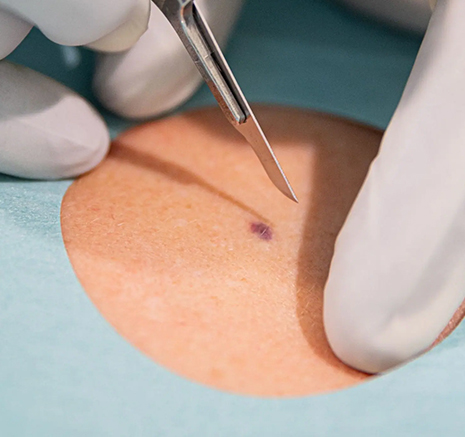
The Uncertain Profile
Dubai’s constant UV exposure can make every new mark feel suspicious. These are the signs that often need specialist review.
- The Changing Mole: A spot develops irregular edges, a new color, itching, or bleeding.
- The Non-Healing Mark: A pearly bump or scaly patch does not disappear after weeks of moisturizing.
- The New Arrival: A fast-growing lesion looks different from your other beauty marks.
- The Lab Anxiety: You want a laboratory-verified diagnosis rather than reassurance without proof.
The Certainty of a Clean Bill of Health
The goal is to move from worry to verified knowledge through a precise medical diagnosis.
- The Definitive Answer: A formal pathology report tells you exactly what the lesion is.
- Early Intervention: If a spot is concerning, it can be identified at the earliest treatable stage.
- A Minimally Invasive Mark: Precise sampling supports rapid healing and a faint professional mark over time.
- A Strategic Health Plan: Future skin checks are planned around your specific pathology results.
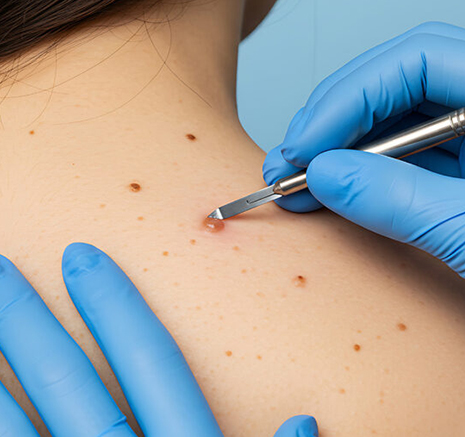
The Diagnostic Gold Standard
Think of a Skin Biopsy as the truth of the tissue.
A tiny representative sample of the lesion is removed under local anesthesia and sent to a specialist dermatopathologist. Microscopic examination is the gold standard for distinguishing benign sun damage from more serious concerns.
- The Procedure: A small skin sample is taken from the lesion under local anesthesia.
- The Techniques: Shave, punch, or incisional biopsy is selected based on the lesion type and depth.
- The Laboratory: The sample is examined by a specialist dermatopathologist under a microscope.
- The Result: The report helps differentiate benign changes from early skin cancers such as Basal Cell Carcinoma or Melanoma.
Our result
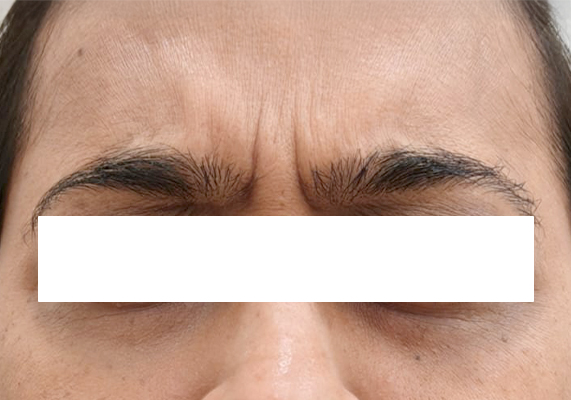
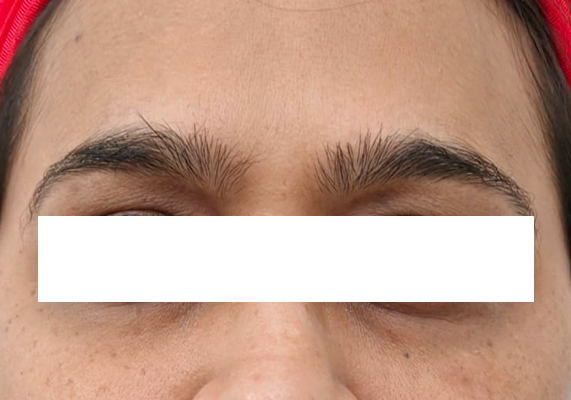
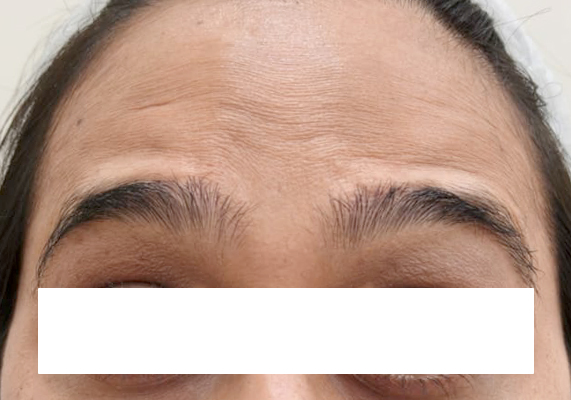
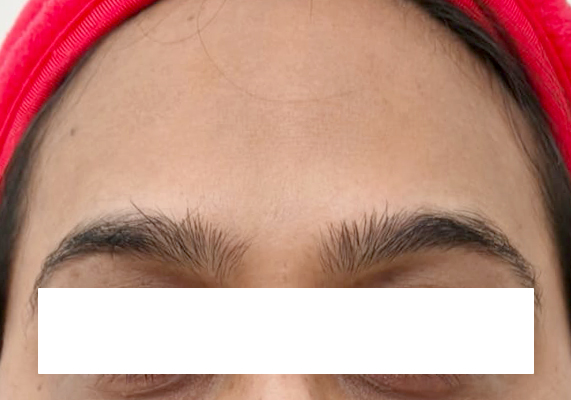
Before & after: witness the power of dermatology
See how specialist diagnostic procedures can provide clarity, support early intervention, and guide the safest treatment path for concerning skin changes.
Recognizing the Clinical Necessity
A biopsy is recommended when a lesion fails the specialist audit or requires a definitive diagnosis before the next step.
- The ABCD Failure: A mole is asymmetrical, has irregular borders, multiple colors, or a diameter over 6mm.
- Persistent Redness: A patch remains inflamed despite medical-grade topical treatment.
- Family History: You have a history of skin cancer and notice even a minor change in your spot map.
- Environmental Context: Prolonged stress or sun exposure makes lesion stability difficult to track.
- The Professional Requirement: Insurance or a health plan requires a confirmed diagnosis before surgical removal.
Medical Integrity, Not Just Taking a Sample
The process is designed for diagnostic accuracy, sterile safety, and the smallest suitable aesthetic mark.
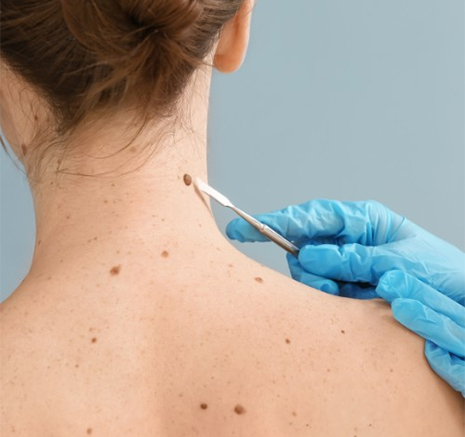
Every suspicious lesion is assessed medically before biopsy. Dermoscopy helps filter clearly benign spots, while sterile surgical technique protects both sample quality and skin healing.
- Diagnostic Precision: Dermoscopy is used to assess whether a biopsy is truly needed.
- The Hospital Standard: The sample is taken in a sterile surgical environment to reduce contamination and infection risk.
- Minimalist Scarring: Precise techniques aim to take the smallest sample that can still provide accurate data.
The Fifteen-Minute Clinical Procedure
The process is calm, sterile, and highly efficient.
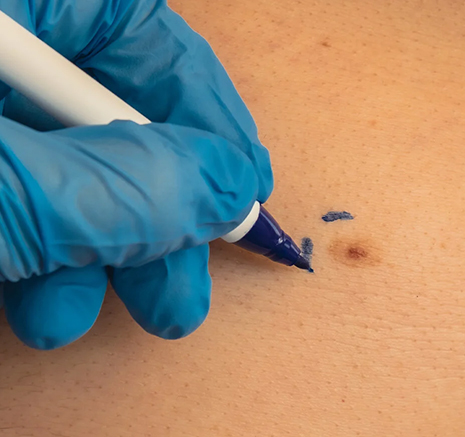
After cleansing and local anesthesia, the tissue sample is collected using single-use specialist surgical tools. Depending on size and site, a small dressing or dissolvable suture is applied.
- The Prep: The area is thoroughly cleansed in a hospital surgical suite.
- The Comfort: Local anesthetic numbs the area within seconds so the sample collection is painless.
- The Sample: Tissue is removed precisely, usually in less than two minutes.
- The Finish: A dressing or single dissolvable suture is applied when needed.
The Diagnostic Path
Skin Biopsies are used when a clinical answer must be confirmed by tissue analysis.
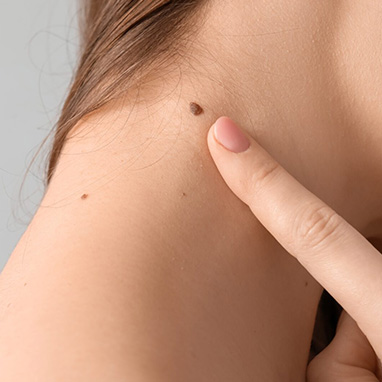

Suspicious Moles
Ruling out Melanoma, Dysplastic Nevi, or other concerning mole changes.
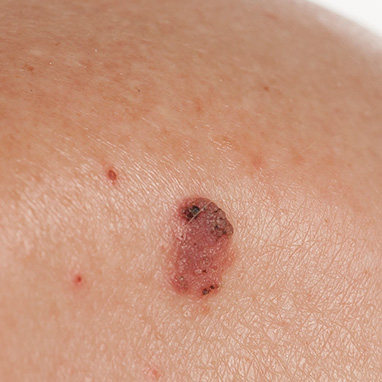

Basal and Squamous Cell Concerns
Identifying common sun-driven skin cancers at an early stage.
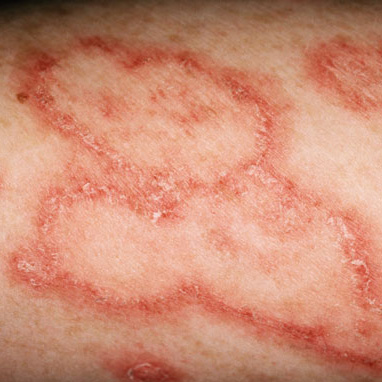

Inflammatory Conditions
Diagnosing complex rashes such as Psoriasis or Lupus when creams fail.
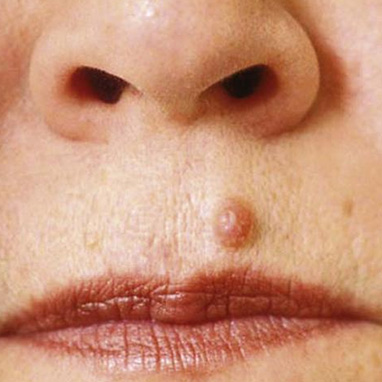

Benign Lesions
Confirming whether a worrying spot is a seborrheic keratosis, sun lentigo, or ot...
Finding Your Reflection

The Health-Conscious Professional:
You value a data-driven health approach and want a definitive lab report, not a guess.
The Long-Term Dubai Resident:
You have spent years in desert sun and know annual spot checks are essential.
The Anxious Patient:
You have worried about a specific spot for months and want specialist care with clinical honesty.
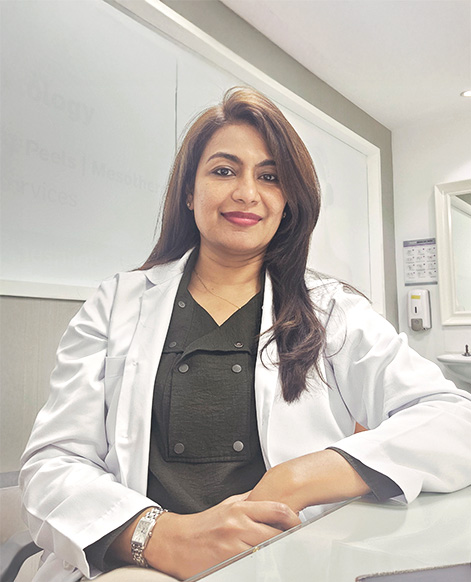
Why Choose me?
Because diagnostic skin procedures need surgical precision, laboratory coordination, sterile standards, and honest medical judgment.

Specialist Surgical Precision: The biopsy is personally performed to ensure a viable sample and minimal aesthetic mark.
Hospital-Grade Laboratory Access: Coordination with top pathology labs supports rapid, accurate results.
Sterile Medical Environment: Treatment is performed across regulated Dubai hospital settings.
Transparent Results: The pathology report is reviewed with you in clear, understandable language.
frequently asked questions
Frequently asked question find out more
Have questions about our dermatology services? Our 'Frequently Asked Questions' section.
The only thing you feel is a brief pinch from the numbing injection. After that, the procedure is completely painless.
Every biopsy leaves a small mark, but specialist techniques are used to keep it minimal, often no larger than a tiny freckle once healed.
Typically, the laboratory report is ready within 5 to 7 working days. You will be contacted as soon as the definitive diagnosis is confirmed.
Yes. A medical-grade dressing is provided so you can maintain your normal routine while the area heals.
Coverage depends on your insurance plan and provider. Medical documentation can be provided when there is a clinical suspicion for the claim.
Book a appointment
Reach out to us today!
It’s time to take control of your skin health! Booking your appointment is easy and fast. Choose a time that works for you and our dermatology experts will be ready.